
1 Transmit
Powerful transmitters send the signal far beyond the horizon.

Shortwave broadcasting
We send the message of Christ across borders, over mountains, and into places the internet can’t reach.
How shortwave reaches
Shortwave signals travel the ionosphere, reaching hundreds to thousands of miles to places the internet can’t.
Powerful transmitters send the signal far beyond the horizon.
The signal reflects off the ionosphere and crosses borders.
Anyone with a radio can tune in—no internet or account needed.
On the air weekly
Tap any frequency to hear that band on a live internet-connected receiver — no radio needed. Receivers are hosted by volunteers, so if one is busy pick another from the KiwiSDR map. Reception is not guaranteed in every location, and frequencies can change — check this page before listening.
Next broadcast
--days: --hrs: --mins: --secs
Practical note
Try different times of day if the signal is weak. Even a simple radio can go a long way.
The mission
Shortwave reaches people the internet can’t — closed countries, remote regions, and anywhere a receiver is all someone has.
Every dollar goes straight to airtime. We take no markup and no cut — your gift is pooled and spent across as many providers as it will stretch.
August airtime goal
$0 of $600 0%
$600 still needed this month.
Every gift buys more minutes.
Choose an amount
Your gift
Your gift$50
No markup, no cut, nothing withheld. Gifts are pooled each month and spent on shortwave airtime across as many third-party providers as we can buy.
How to hear the broadcast
Look for a radio marked SW, shortwave, or HF that covers the listed frequency.
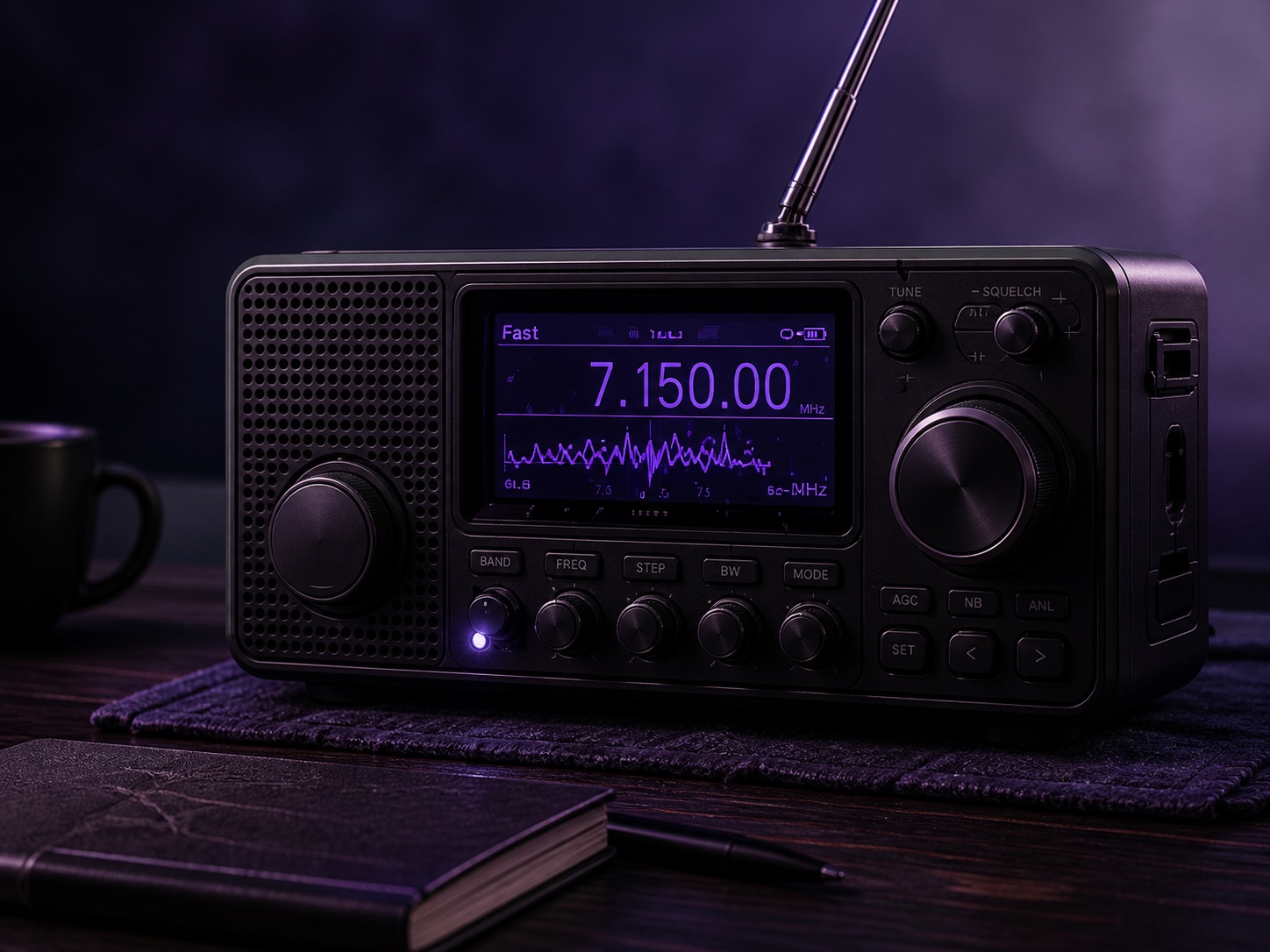
Place the radio near a window, extend its antenna, and move away from noisy electronics.

Enter the frequency and listen a few minutes before and after the scheduled start.

Reception tip
Time of day, season, solar activity, location, and local electrical interference can all affect reception. A weak signal today may be strong another day.
Best times to try